If you follow the Indian motorcycle market with any regularity you will know that the past year or so has been one of the most exciting periods in recent memory for new bike launches. The volume of new models, updated versions, and entirely fresh platforms arriving across every segment of the market has been remarkable. Whether you are in the market for an affordable commuter, a mid-range performance motorcycle, a premium adventure bike, or you are watching the electric two-wheeler space with interest, there is genuinely a lot happening right now that is worth paying attention to.
The Indian two-wheeler market is one of the largest in the world and the manufacturers who compete in it know that Indian buyers are among the most informed and most opinionated motorcycle consumers anywhere. Reviews are read carefully. Specifications are compared exhaustively. Real-world ownership experiences are discussed in depth on forums and social media communities that have become some of the most active enthusiast spaces in global motorcycling. When a new bike launches in India, it gets scrutinised with a thoroughness that manufacturers in other markets rarely face.
This blog is going to walk through the most significant recent and upcoming bike launches across every major segment of the Indian two-wheeler market. What is new, what has changed, what the pricing looks like, and what the early impressions suggest about which launches are genuinely exciting and which are more incremental than the marketing suggests. All of it in plain, practical language for people who care about bikes.
Royal Enfield: The Brand That Cannot Stop Launching
Royal Enfield has been on a remarkable run over the past several years and that momentum has shown no signs of slowing. The brand has moved from being primarily a maker of one or two beloved but aged platforms to operating a genuinely diverse portfolio that competes meaningfully across multiple segments.
The Royal Enfield Guerrilla 450 is one of the most talked-about recent launches from the company and for good reason. Built on the same 452cc liquid-cooled platform that underpins the Himalayan 450, the Guerrilla is a roadster that takes the capable, proven engine and pairs it with a more urban, stripped-back aesthetic. The ride position is upright and comfortable for city use, the engine character in this state of tune is smooth and accessible, and the pricing has been positioned competitively within the growing mid-range roadster segment.
The Himalayan 450 itself, which arrived with significant fanfare, has bedded in well in the market. The leap from the older Himalayan with its 411cc air-cooled engine to the new liquid-cooled platform was substantial and the riding community has broadly welcomed the result. Better power delivery, proper electronics including multiple riding modes and switchable traction control, improved suspension with more travel, and a screen-based instrument cluster that provides navigation and connectivity all represent a genuine generational step forward rather than a cosmetic refresh.
Royal Enfield has also continued to expand the Classic 350 family, which remains one of the best-selling motorcycles in the premium commuter and leisure segment in India. Updates to colour options, minor specification changes, and the continued availability of multiple variants have kept the model relevant in a segment where it faces growing competition.
The Bear 650 concept that Royal Enfield revealed has generated significant excitement in the enthusiast community and watching how that platform develops into a production motorcycle over the coming months will be one of the more interesting stories in the segment. The 650 twin platform has already proven itself through the Interceptor and Continental GT and a scrambler-influenced variant built on the same reliable engine has obvious appeal.
Hero MotoCorp: Pushing Into New Territory
Hero MotoCorp occupies a dominant position in the Indian commuter segment that is unlikely to be meaningfully challenged in the near term, but the more interesting story from Hero right now is what the company is doing beyond its core commuter business.
The Karizma XMR, Hero’s re-entry into the performance segment after years of absence, has had a mixed reception that reflects both its genuine capabilities and some of the compromises that production realities imposed on it. The styling is aggressive and has attracted genuinely positive attention. The performance from the 210cc liquid-cooled engine is adequate for its class. But the pricing, which placed it in direct competition with more established players in the 200 to 250cc performance segment, has made the comparison conversation unavoidable and that conversation has not always been flattering.
Hero’s Xpulse range, however, continues to demonstrate that the company can compete effectively in the adventure segment at accessible price points. The Xpulse 200 4V and its variants have built a loyal following in the community that uses smaller adventure bikes for genuine off-road exploration rather than simply for the aesthetic. The combination of capable suspension, accessible engine character, reliable Hero service network coverage, and competitive pricing has made the Xpulse a genuine alternative consideration in its class.
The upcoming launches from Hero in the premium segment are being watched with interest. The company’s investment in a new premium platform and its growing relationship with Harley-Davidson through the distribution and development partnership represents an ambition to move meaningfully upmarket that will play out over the next few years.
Bajaj Auto: The Pulsar Legacy and What Comes Next
Bajaj has been systematically refreshing and expanding the Pulsar portfolio in ways that reflect both the brand’s strong heritage in the performance commuter segment and its awareness that the competitive landscape has changed significantly.
The Pulsar N160 and Pulsar N250 have been among the more thoughtful additions to the range in recent years. The N160 in particular hits a price-performance sweet spot that has attracted buyers who want something more characterful than a basic commuter without the cost of stepping into the genuine performance segment. The twin disc brakes across the range, the improved ergonomics relative to older Pulsar models, and the engine refinement that has improved with each generation have all contributed to the model’s positive reception.
The Bajaj Dominar 400 continues to hold its position as one of the most capable touring motorcycles available in India below the half-litre segment. The updates that have been applied to it over its production life have refined rather than reinvented, which reflects the reality that the fundamentals of the motorcycle are strong enough not to require wholesale change. Buyers looking for a capable, long-range capable touring motorcycle at a price point below the premium segment consistently find the Dominar a compelling option.
The partnership between Bajaj and Triumph Motorcycles has already produced the Scrambler 400 X and the Speed 400, both of which have been received very positively by the market. The Speed 400 in particular has been described as one of the most complete motorcycles available in India at its price point, combining genuine Triumph character, excellent fit and finish, proper performance for its class, and a dealership and service network backed by Bajaj’s established infrastructure. The upcoming additions to this jointly developed range are among the most anticipated launches in the mid-premium segment.
TVS Motor Company: Technology and Performance
TVS has established itself as one of the most technology-forward manufacturers in the Indian market and its recent launches reflect a consistent commitment to bringing sophisticated features to accessible price points.
The TVS Apache RTR 310 is the brand’s flagship performance motorcycle and it has been updated with sufficient regularity to remain competitive in the growing 300cc class. The single-cylinder 312cc engine produces performance that is genuinely engaging on the right road, the suspension and brakes are properly specified for the performance envelope, and the electronics package including ride modes and quickshifter on certain variants positions the motorcycle competitively against both domestic and international competition in the segment.
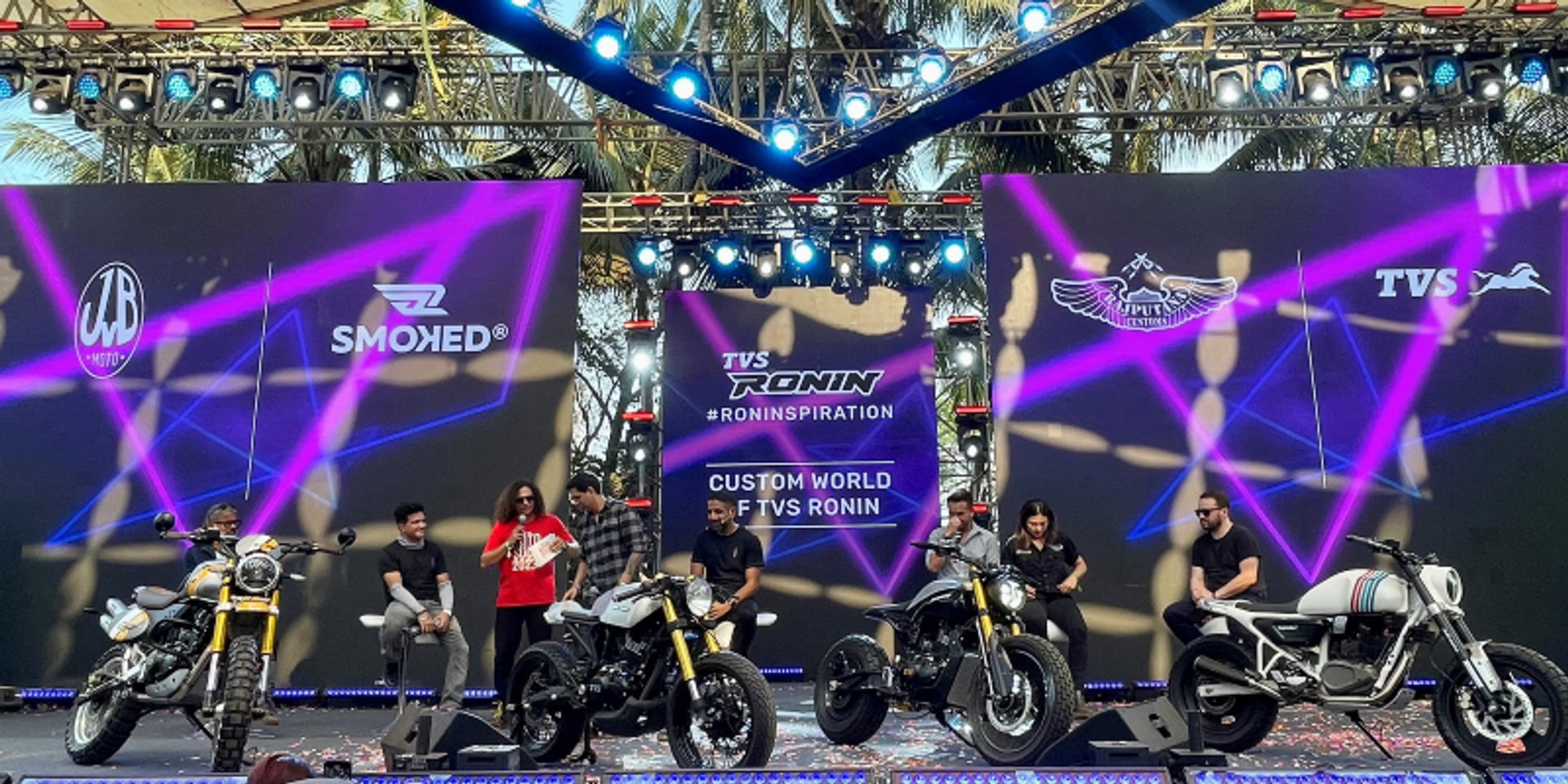
The TVS Ronin has carved out an interesting position in the mid-range market by prioritising character and versatility over outright performance specification. The roadster-influenced styling, the comfortable riding position, the torque-focused engine character, and the thoughtful feature content have attracted buyers who found existing options in the segment either too committed to performance or too boring in character. It is not the fastest motorcycle at its price point but it may be the most enjoyable for daily riding in the conditions that most Indian buyers actually encounter.
The electric scooter story at TVS is significant and the iQube has established a meaningful position in the premium electric scooter segment. Regular updates to range, features, and variant availability have kept the product competitive in a segment that is evolving very quickly. The anticipated expansion of the electric lineup from TVS with higher-performance models and potentially an electric motorcycle is being watched with genuine interest.
Honda Motorcycle and Scooter India: The Volume Leader and Its Premium Push
Honda occupies a unique position in the Indian market. It is the volume leader in the scooter segment through the Activa family and it has a range of commuter motorcycles that sell in enormous numbers. The more interesting story from Honda right now is what the company is doing at the premium end of the market.
The Honda CB300R and CB300F have given Honda a presence in the entry-level premium segment that it previously lacked. Neither is the most powerful motorcycle in its class but both reflect the Honda values of refinement, reliability, and build quality that the brand’s customers have come to expect. The CB300F in particular, with its more conventional street bike aesthetic, has found buyers among those who find the aggressive styling of many competitors less appealing.
The CB350 H’ness and the CB350RS continue to represent Honda’s most direct play in the Royal Enfield territory. The combination of retro aesthetics, smooth single-cylinder engine character, excellent build quality, and Honda’s established service network has given both models a loyal following. The pricing is competitive with equivalent Royal Enfield offerings and the Honda refinement advantage is real for buyers who value it.
The anticipated arrival of more powerful Honda motorcycles in the Indian market, with the 500cc class and potentially the Africa Twin in more accessible form, represents a significant potential expansion of Honda’s premium range. The distribution infrastructure exists and the brand equity is strong. The question of when and at what price point these models arrive is one that the enthusiast community continues to discuss with anticipation.
Suzuki Motorcycles: Quality and the Gixxer Platform
Suzuki occupies a focused and well-defined position in the Indian market built around the Gixxer platform and the Access scooter family. The Gixxer 250 and Gixxer SF 250 have consistently been among the more refined options in the 250cc class, with an emphasis on smooth power delivery, build quality, and long-distance comfort that reflects Suzuki’s touring-oriented brand values.
The Suzuki V-Strom SX, which brought the V-Strom adventure nameplate to an accessible price point in India for the first time, generated significant interest. The 249cc single-cylinder engine is tuned for accessible, usable performance rather than outright power, the suspension is longer-travel than a standard road bike, and the ergonomics accommodate upright, commanding riding positions that work for both city riding and longer distance touring on mixed surfaces. The V-Strom SX represents a different approach to the adventure segment than the larger-engined alternatives and it has found buyers who appreciate that distinction.
KTM and Husqvarna: Performance From Mattighofen
KTM continues to set the performance benchmark in the 200 to 400cc segment in India with the Duke and RC range, and the partnership with Bajaj that enables local manufacturing and competitive pricing remains one of the most successful collaborations in the history of the Indian premium motorcycle market.
The KTM 390 Duke remains one of the most complete motorcycles available in India at its price point. The combination of performance, electronics, build quality, and riding dynamics that the 390 platform delivers has established it as the default recommendation in its class for buyers prioritising performance and engagement above other considerations. The recent updates including improved electronics and revised ergonomics on newer iterations have kept it competitive against the growing number of alternatives that have arrived in the segment.
The KTM 250 Adventure and 390 Adventure continue to grow in popularity as the adventure segment in India matures. The 390 Adventure in particular has benefited from updates that addressed some of the initial criticisms of the model, and the combination of its WP suspension, capable 373cc engine, and Bosch cornering ABS makes it one of the most technically sophisticated adventure motorcycles available at its price point anywhere in the world.
Husqvarna’s Svartpilen and Vitpilen models, built on the same platform as the KTM Duke range, offer a different aesthetic and a slightly different riding character that has attracted buyers who find the KTM styling too aggressive. The Svartpilen in particular, with its scrambler-influenced design, speaks to the growing interest in versatile, characterful motorcycles that work across multiple riding contexts.
Yamaha: The R15 Legacy and the MT Range
Yamaha has maintained a focused and effective strategy in the Indian market built around a few key platforms that are updated and expanded rather than multiplied. The R15 platform has become one of the most enduring and most respected in the performance entry-level segment, and the current generation R15 V4 with its variable valve actuation technology and superbike-influenced styling has renewed the model’s relevance in a market where it has been present for over a decade.
The MT 15 V2 has established itself as the naked companion to the R15 that the segment needed. The more relaxed ergonomics, the different aesthetic, and the slightly more accessible riding character compared to the fully faired R15 have attracted buyers who want the performance of the platform without the committed riding position of the sportsbike configuration.
The Yamaha FZ-X, positioned as a more adventure-influenced variant in the FZ family, reflects Yamaha’s awareness that the adventure-influenced aesthetic has broad appeal beyond the buyers who actually use their motorcycles off-road. The raised riding position, the adventure styling details, and the accessible engine character make it a sensible daily commuter that looks more interesting than a standard street bike.
The Electric Segment: The Story Everyone Is Watching
No discussion of current bike launch news in India would be complete without acknowledging the electric two-wheeler segment, which is growing rapidly and producing genuinely interesting products at an increasing rate.
Ola Electric has established a dominant position in the electric scooter segment through aggressive pricing, high feature content, and a direct-to-consumer sales model that bypasses traditional dealerships. The ongoing expansion of the Ola lineup with higher-performance models and the anticipated electric motorcycle represent the company’s ambition to be a full-range electric two-wheeler manufacturer rather than a scooter-only brand.
Ather Energy, which has built a reputation for quality and performance in the premium electric scooter segment, continues to develop its platform and expand its charging network. The Ather 450 range remains one of the most driver-focused electric scooters available in India with genuine performance, responsive handling, and a connected experience that sets the standard in its segment.
The arrival of electric motorcycles in India, as distinct from electric scooters, is one of the most anticipated developments in the segment. Several manufacturers have revealed concepts and prototypes and the question of which reaches production first, at what performance level, and at what price point will shape the next phase of the electric transition in the Indian two-wheeler market. Royal Enfield’s Flying Flea concept has generated significant enthusiasm. The production reality of that enthusiasm is something the next year or two will reveal.
What to Watch in the Coming Months
The pipeline of anticipated launches and updates for the remainder of the year and into the next is genuinely exciting for enthusiasts across every segment.
The next generation Yamaha R15, if the persistent speculation about significant updates proves accurate, would be a significant event in the performance entry-level segment. The evolution of the KTM 390 platform with potential updates to the Duke and Adventure variants is another anticipated development. The expansion of the Triumph and Bajaj jointly developed range with additional models beyond the Speed 400 and Scrambler 400 X is something dealers and buyers are both watching closely. The launch of Honda’s CBR300R or equivalent replacement for the CB300R could reshape the comparison conversation in that class. And the continued development of the Royal Enfield 650 platform, with potential new variants building on the twin-cylinder engine that has proven so successful in the Interceptor and GT, keeps that story moving forward.
Conclusion
The Indian two-wheeler market has never been more competitive, more diverse, or more interesting than it is right now. The range of genuinely excellent motorcycles available across every price segment, from accessible commuters to capable mid-range performers to premium adventure machines, reflects both the maturity of the market and the seriousness with which manufacturers are taking Indian buyers.
The launches covered in this blog represent different strategies, different priorities, and different visions of what the Indian motorcycle buyer wants and needs. Royal Enfield has built a brand around character and community that is now supported by genuinely capable new technology. Bajaj has leveraged the Triumph partnership to access premium positioning that its own brands could not easily achieve. TVS continues to push technology features into accessible price points. Honda brings refinement and reliability to every segment it enters. KTM and its associated brands maintain the performance benchmark at aggressive pricing. Yamaha builds around proven platforms with disciplined development. And the electric segment is evolving with a speed that is genuinely extraordinary.
For buyers in the market for a new motorcycle, the challenge is no longer finding something worth buying. The challenge is narrowing down a genuinely impressive set of options to the one that best matches your riding style, your budget, your maintenance preferences, and the specific way you intend to use the motorcycle. That is a very good problem to have and it reflects how far the Indian two-wheeler market has come in a remarkably short period of time.
Stay connected to the launch news, read the real-world ownership reviews rather than only the first-ride impressions, visit the dealerships and experience the motorcycles in person before committing, and make the choice that genuinely suits your riding life rather than the one that is most discussed on the forums. The right bike for you is out there and in the current market it has never been easier to find it.